Share:   |
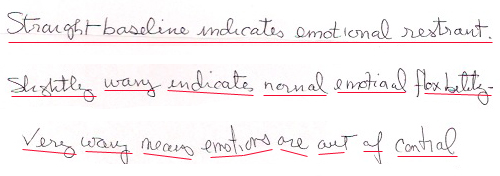
The next step is to determine the emotional control and reliability of the writer. This trait is shown in the baseline of the writing.
The baseline is a real or imagined line where the small letters rest. Baseline is best determined if the sample is submitted on unlined paper to ensure that the writer does not follow the pre-printed lines. For best results, handwriting analysts always prefer samples written on unlined paper.
The baseline can be straight, wavy, erratic or sloped. A normal baseline should be slightly wavy. A person with a straight baseline is tense and over disciplined. A very wavy baseline signals a person who is on an emotional roller coaster.
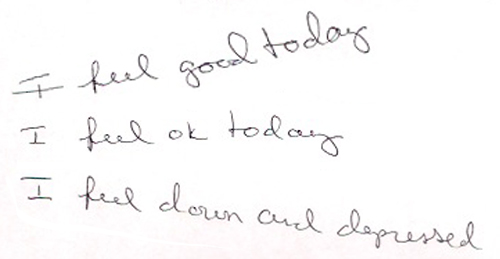
An ascending baseline means optimism. A descending baseline means pessimism, tiredness or depression. A level baseline indicates a healthy balance between optimism and pessimism.
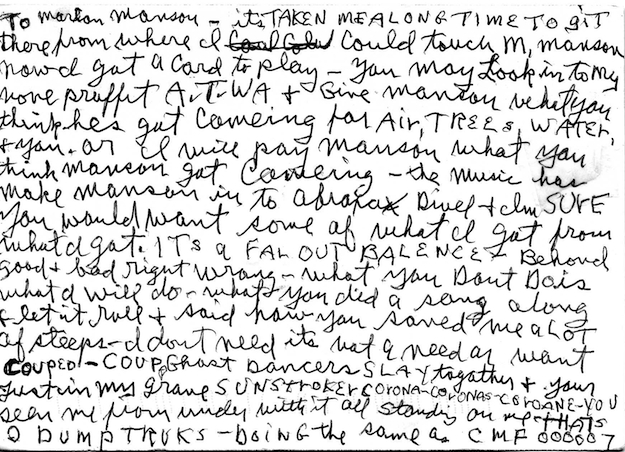
The following is a sample of Charles Manson's handwriting. Notice that baseline is very wavy, indicating a person whose emotions are unstable and out of control.
Concentration
Step 4 in handwriting analysis determines the writers ability to concentrate. This trait is indicated by the size of the writing.
Small writing points to someone who has the ability to concentrate on minor details for long periods of time. They are not easily distracted by outside forces. These writers include scientists, researchers, bookkeepers, etc. People who write small like to work alone. They can be trusted to take on tedious tasks and follow them through to completion without being side tracked. Those who write small are usually conservative and thrifty.
Most of us write average size, indicating an average ability to concentrate. We have to force ourselves to concentrate on minor details, especially for long periods of time. Large writers are easily distracted. They have trouble concentrating and easily get "off-track." At work, these individuals should be given varying duties and assignments that are quick to complete.
Here is a sample of Albert Einstein's handwriting, actual size.
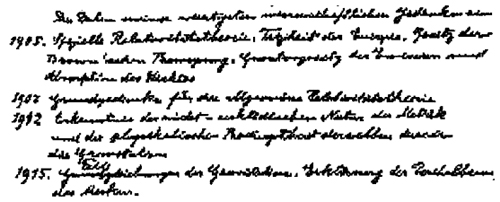
Get a pen and paper and try to write this small. You will feel your whole body go tense as you concentrate on making the small letters. I have examined this sample with a magnifying glass and every letter is shaped perfectly. It is a beautiful piece of art.
Putting it all Together
So far, we have covered:
*Emotional and physical energy (pressure applied when writing)
Slant of writing ...\\\.....lll../// (indicates what the writer does with this emotional and physical energy)
*Emotional control and emotional reliability (baseline)
*Ability to concentrate (size of writing)
Now let's take a look at Sample 1, below:
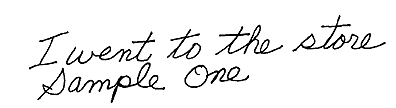
The writer uses heavy pressure, pointing to a person with deep, long-lasting emotions. The right slant indicates the writer responds freely with these emotions (heart rules the mind). The writing is large and indicates that the writer has trouble concentrating on tedious tasks and is easily distracted. The baseline is only slightly wavy, revealing no inner emotional turmoil.
This is a friendly outgoing person with a lot of energy. This person needs variety and lots of activity. The emotional stability of the baseline indicates s/he is reliable and dependable.
On to Sample 2:
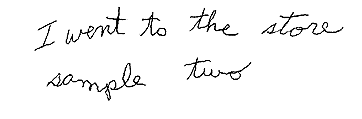
The writers pressure and size if writing is average, indicating s/he usually has enough energy to handle daily activities. Emotional response is slightly inhibited (vertical writing) indicating the head rules the heart. Average size of script shows the ability to concentrate on daily activities without being distracted too much by what's going on around him/her. The baseline is wavy indicating changeable moods- sometimes in a good mood, sometimes not. The wavy baseline is common in vertical writing because people who try to control their emotions have a certain amount of inner emotional turmoil.
Try analyzing a few samples of friends' handwriting using the skills you've gained from Steps 1-4. In my next article I will cover the three "zones" of handwriting and I will also analyze Bill Clinton's handwriting.