|
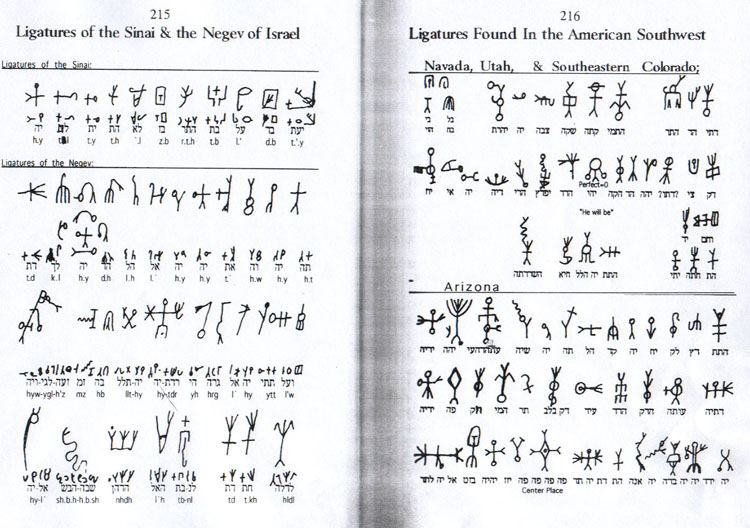
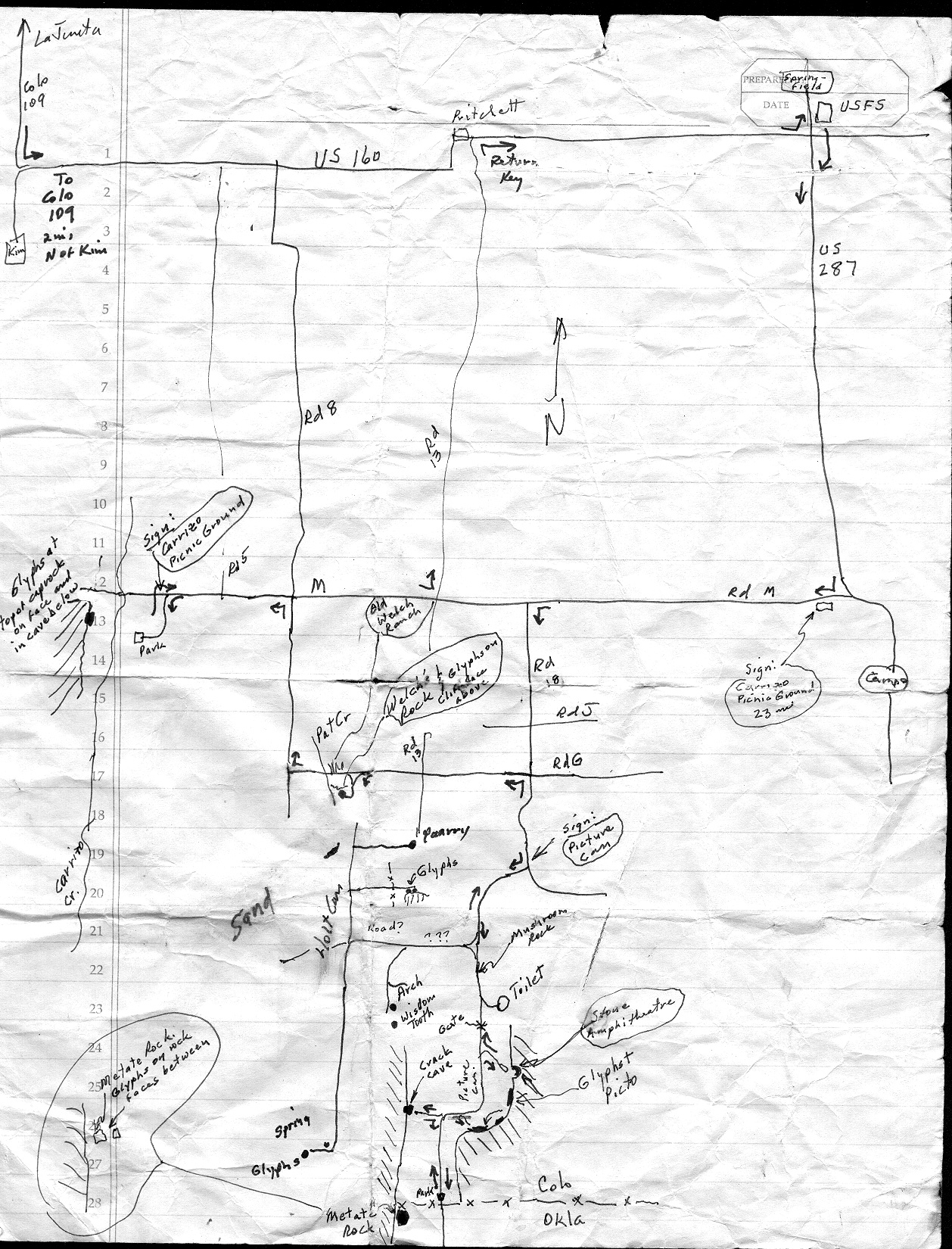
Global Map Showing location of petroglyphs. Global Petroglyph Collection. A collection of interesting petroglyphs from around the globe. The Alphabet. An illustration of the symbols, their Hebrew equivalent and sound value. An Historical Perspective of the ancient alphabet. NEW! Evidence FT(proto-Canaanite) pre-dates Egyptian Hyeroglyphics. Ligatures & "Word Pictures." A description of the picture style of writing with translations. Detail of a ligature (Photo with translation) Ligatures in SE America and the Middle-East, compiled by Harris. Purgaory River Site in Colorado. A collection of photos and translations from the ares South of LaJunta.
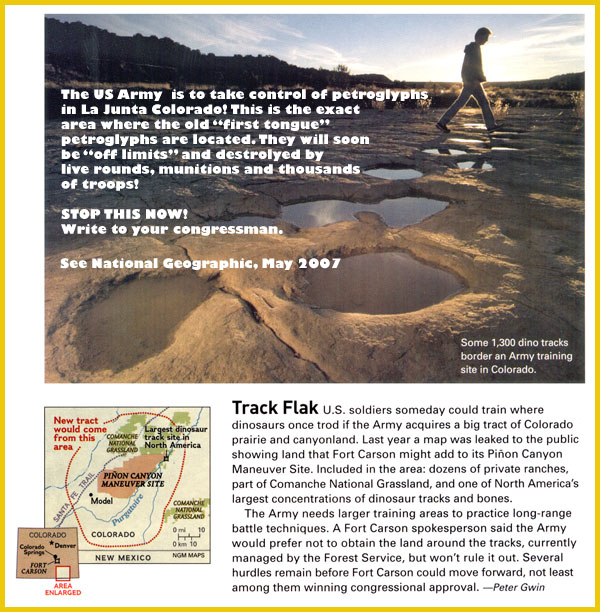
Military to make petroglyphs "off-limits". Plans to use historic area as war game camp.
Yemeni Museum artifacts, photographs and translations from the expedition in 2001.
Yemeni Petroglyphs in Sa'da desert.
Oklahoma Site A 60 foot wall with prophetic petroglyphs.
Gillespie site in Colorado. Some of the best examples of religious petroglyphs.
Gillespie Stone A detailed expedition to this important site in 2002. (Photos & Maps)
Australian Site A style known as Panaramitee.
Translation Program Requires JavaScript and runs on most browsers.
James Harris in Negev, Israel. The discoverer of old-Negev alphabet.
LaVan Martineau Interpretation of Native American a writing system.
Commentary
|
 First Tongue: An Ancient Global Language Introducion
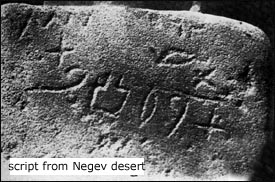
In the last part of the 20th century, a handful of archaeologists discovered a collection of symbols carved in stone as petroglyphs that appeared to be writing. Initial dating of these symbols showed that they were made over an extended period of time, beginning around 1500 BC, and are located on as many as five continents. This unique collection of symbols was first examined in the Negev desert of Israel by Dr. James Harris, a brilliant archaeologist from Brigham Young University. He identified the symbols as an alphabet in the proto-Canaanite language which he successfully translated by using old-Hebrew phonetic sounds. The earliest examples of this writing were first described as graffiti left by workers of a turquoise mine. Later, excellent examples were found in a mining site that collapsed and remained intact from around 1500 BC, established by carbon-14 dating of wooden beams used to support the tunnels. This discovery was called "Old Negev" by Harris because of its location in the Israeli desert.
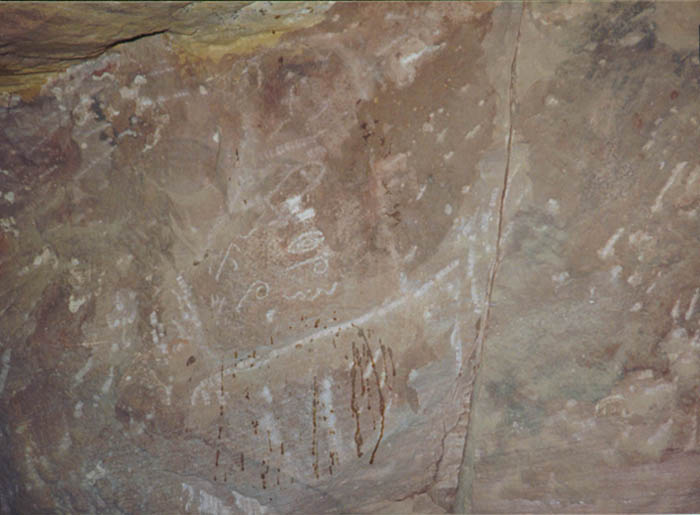
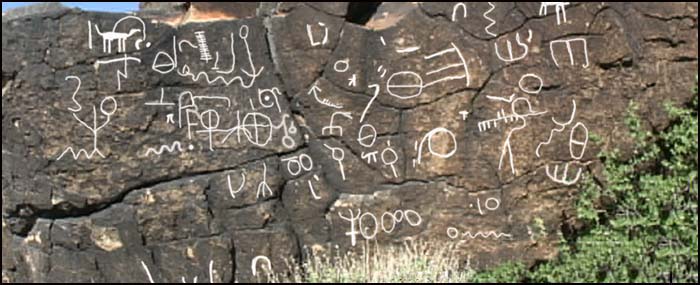
In 1999, Viewzone visited and photographed the petroglyphs in Colorado and posted them on the internet for comments. [right: Original image from Colorado enhanced to show details. 37-38'12.59"N 103-35'12.88"W.] Within a few years, images of similar petroglyphs were sent to Vey by archaeologists and historians from many global locations. This included a huge, refined collection of writing from the Republic of Yemen, at the site of the newly discovered palace of the Queen of Sheba. Vey was immediately invited to visit the museums and archaeological sites in Yemen and photographed as well as translated many of the older stone and bronze artifacts. The writing in Colorado and Yemen spoke of some event, possibly related to the Sun, which was prophesied to change human civilization. Subsequent translations of sites in Oklahoma, Australia and South America have added more details about this future event; however, the present report is meant to describe and illustrate this ancient writing system, which we are calling "first tongue." It is similar to proto-Canaanite but, because it seems to pre-date the Canaanites, the use of "First Tongue" is preferred. In the years following the Viewzone Yemen Expedition of 2001, Vey has worked closely with historian and linguist, John McGovern, who resides in Australia. McGovern has collected examples of FT from around the globe and has attempted to reconstruct the esoteric, religious and cultural systems that motivated these early authors. He describes a highly developed understanding of deity and the cosmos that inspired these ancient texts.
 Viewzone || Comments Viewzone || CommentsNote: I have received many inquiries about this discovery. While we continue to receive photographic material from new finds in Yemen, we have decided to refrain from posting these. Why? Inevitably some traditional archaeologists will attempt to argue about the methods of the translation or of the possibility of the scripts being found in various geographic areas. In our younger years we would have debated these points and adhered to the traditional paradigm of journal publication etc. Instead, since the translations are revealing important prophetic information we have decided to focus all of our efforts to this task. Our goal is not academic or to achieve fame. In actuality, there is no time for that. A translation program in JavaScript, which will run on any browser, has been provided to validate our work. Thanks for your kind words and interest. Gary Vey |
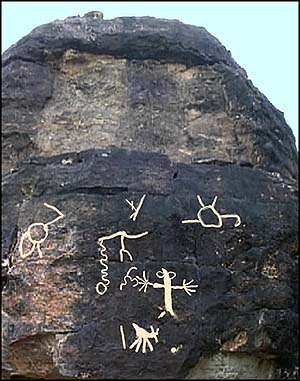
 [Above: Colorado wall originally enhanced with aluminum powder on location but here enhanced with white in Photoshop to reveal shapes. 37-44'58.91"N 103-28'48.96"W]
  In the late 1990's, William