T H E E X P E R I M E N T
|
We are about to show you three female faces, of various ages and poses. We will zoom in on the face so that you will be looking at an area from just above the eyebrows to just below the chin. These images will be in black and white and about an inch and a half square. Below each of these photographs there will be a table with attributes such as INTELLIGENT, HEALTHY, AGGRESSIVE... and so on. To the right of each of these positive qualities there will be five (5) buttons that you may click on to show your impressions of the person in the photograph. 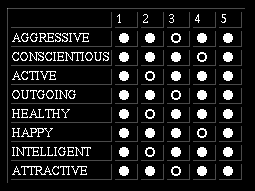 For example: If you were selecting for "HEALTHY," and you thought that the photograph showed someone who was very healthy, you could select the fifth button. If you thought the person in the photograph looked very ill, you could choose the first button. If you were not sure either way, you could select one of the buttons in between. Don't spend a great deal of time on each attribute— it is your general impressions that we want to measure. There are no right or wrong answers. Note: Please make only one selection for each attribute. Your first choice will be the only one that is tabulated, so think carefully before you click. Clicking on more than one button for any attribute will not give the correct results, which will be shown and explained to you at the end of this experiment. Be sure to return to the article when you have finished with the experiment. A link will be provided at the bottom of the last page. Good luck!
|

|
The scale was rated so that the higher score reflected your impressions of more positive attributes. We did not count the second face that you were asked to rate. This was provided as a distraction so that you would not recognize (hopefully) that the first and third faces were similar. Even if you did, the results should still show a difference. The face on the left, the Facial Symmetric model, was made by mirroring one half of the face and copying it to the opposite side of the picture, so that it is perfectly bilateral and equal. The face on the right was distorted and facial characteristics were moved and slanted to exaggerate a sense of imbalance of facial features. Most people will infer more positive characteristics when viewing a bilateral symmetric face -- did you? Read on and you will learn the reasons behind this phenomenon. |